(Whispering, so as not to jinx it) I am having a go at writing historical fiction set in Australia – specifically Melbourne and Queensland – in the second half of the nineteenth century. Mindful of the need to be a good reader in order to be a good writer, I’ve been seeking out beautifully written works of Australian historical fiction set in (roughly) the same period. A recent call-out on social media produced a list that generated some interest among my followers; so I thought I’d put it together for any interested readers to access.
A Kindness Cup – Thea Astley
Set in Queensland and described by the Australian Book Review as ‘[o]ne of the earliest and most empathetic postwar engagements by a white Australian writer with the horrors of nineteenth-century racial violence.’
The Salt Letters – Christine Balint
Set in 1854, this Vogel shortlisted novel centres on 16 year old Sarah Garnett who is among a group of unmarried women forced to leave England for Australia. The description of the novel, which sounds wonderful, reminded me of Voyage, Helen Begley’s song-cycle about the unmarried women sent from the UK and Ireland to Australia in the 1830s to address the gender imbalance. I’ll be adding this one to the TBR.
Infamy – Lenny Bartulin
Set in Van Diemen’s Land in 1830, “Infamy is a superbly rendered piece of historical fiction, a dark, almost noir crime story, and a unique and unashamedly Australian take on the western. Possibly my best read of 2013″ (PulpCurry).
Robbery Under Arms – Rolf Boldrewood (aka Thomas Alexander Browne)
This novel, published in 1888, is set on the Australian goldfields in the 1850s and narrated by a member of bushranger Captain Starlight’s gang.
The Philosopher’s Daughters – Alison Booth
Recommended by Kirsty Murray, this romantic historical novel is a story of two free-thinking sisters, set in London and the Australian outback in the 1890s. Always interested in cultural outliers, this is one for the TBR pile.
The Silence of Water – Sharon Booth
Recommended by Maria Papas and set in WA at the turn of the nineteenth century, this looks like an enthralling read.
Oscar and Lucinda – Peter Carey
It’s decades since I read Carey’s Booker Prize winning novel. Must revisit.
The Burial – Courtney Collins
Recommended by Lucy Treloar and shortlisted for the Stella Prize, though the setting is a little late for me (1920), it’s a novel I’ve been meaning to read for some time.
The Journal of Fletcher Christian – Peter Corris
This novel sounds absolutely intriguing, Corris’s take on the ‘true story’ of the events surrounding the mutiny on the bounty, drawn from historical diaries.
The White Woman – Liam Davidson
From Lisa’s review at ANZ Lit Lovers: ‘In the 1840s when countless ships were lost off the perilous Victorian coastline, the loss of the Britannia which was wrecked on the Ninety Mile Beach in 1841 gave rise to the rumour that a female survivor had been taken captive by the Kurnai People. Fear of the unknown and public outrage led to rescue expeditions, one of which is the basis for the novel.’ The novel is out of print but I’ll keep my eye out for a secondhand copy.
The Norseman’s Song – Joel Deane
Described as noir and gothic, Deane’s novel ‘weaves the violent, hallucinatory tale of a 19th century Norse whaler with that of wild, early days in Australian tabloid newspapers’ (Time Out).
Savage Crows – Robert Drewe
Interesting to note that Drewe’s novel, first published in 1976, deals with the same historical material as Jock Serong’s The Settlement (see below): the massacre of Tasmania’s Aborigines and George Robinson’s ill-advised establishment of a ‘protectorate’ on Flinders Island. Drewe’s dual narrative moves between the 1830s and 1970s.
The Angel of Waterloo – Jackie French
The time period is a little early for me, but French’s YA novel is recommended for its wonderful historical detail.
The Secret River – Kate Grenville
Grenville’s multi-award winning novel, inspired by her family history, is set in the early nineteenth century in what was then the frontier between British colonists and Australia’s indigenous people: the Hawkesbury River, 80 km northwest of Sydney.
Bila Yarrudhanggalangdhuray – Anita Heiss
Opening in Gundagai, set on timeless Wiradyuri country in the mid-nineteenth century and based on devastating true events, Bila Yarrudhanggalangdhuray (River of Dreams) is an epic story of love, loss and belonging.
Benevolence – Julie Janson
Recommended by Gordon Duncan, Benevolence spans the years 1816–35, and is set around the Hawkesbury River area, the home of the Darug people, in Parramatta and Sydney; the author is a Burruberongal woman of Darug Aboriginal Nation.
Paris Savages – Katherine Johnson
This novel was on my TBR for some time when Kirsty Murray’s recommendation bumped it to the top. Set mostly in Belle Epoque Europe, Paris Savages is a disturbing, absorbing account of three Badtjala people from K’gari (Fraser Island) who were toured as ‘live exhibits’ in the equivalent of human zoos.
Sixty Lights – Gail Jones
This story starts out in Australia in 1860, before the orphaned child Lucy Strange and her brother Thomas are taken in by an uncle in London. Lucy also travels to India, the action moving between London and the colonies. Despite not being so relevant to my own setting, I am intrigued by this novel, which was longlisted for the 2004 Booker Prize, short-listed for the 2005 Miles Franklin Award and won a slew of prizes. Thanks to Sandra Leigh Price for this recommendation.
Fled – Meg Keneally
While set earlier than my own Work In Progress (WIP), I was captivated by this artfully crafted story, based on the life of convict Mary Bryant — recast as the character Jenny Trelawney — which reads like a thriller.
The Dickens Boy – Thomas Keneally
Based on a true story, the story narrated by Charles Dickens’s tenth child, Edward Bulwer Lytton Dickens, known as Plorn, who was dispatched to Australia at age 16 to learn to ‘apply himself’. Set largely in outback NSW, it’s a rollicking read.
Devotion – Hannah Kent
Kent’s latest novel opens in Europe in 1836 and moves to South Australia in 1838. The novel garners praise for its beautiful prose and affecting love story. Jacinta di Mase, who recommended it, says it’s ‘transformative’.
English Passengers – Matthew Kneale
A polyphonic novel set in Van Diemen’s Land in the mid-nineteenth century.
Bridget Crack – Rachel Leary
Set in Van Diemen’s land in 1838, Lenny Bartulin (above) calls this story of a convict woman’s struggle to survive transportation, servitude, the bush and bushrangers ‘a compelling story and terrifically told’.
Picnic at Hanging Rock – Joan Lindsay
Lindsay’s classic 1967 novel, set in Victoria in 1900, concerns the disappearance of a group of school girls and their teacher during the eponymous picnic at Hanging Rock.
Remembering Babylon – David Malouf
Malouf’s award-winning novel, set in Queensland in the nineteenth century, was inspired by the experiences of shipwreck survivor James Morrill, who lived with Aboriginal people in North Queensland for 17 years from 1846 to 1863.
The Sun Walks Down – Fiona McFarlane
Another book I bumped on the TBR pile when it was recommended by Susan Wyndham. McFarlane’s novel is an engrossing read, ostensibly about the search for a missing child, but more broadly about colonialism. Set in South Australia in 1883, and told from an intriguing array of viewpoints, it’s a captivating read.
Skylarking – Kate Mildenhall
Mildenhall’s novel, set on an isolated Australian cape in the 1880s, is based on a true story that centres on the friendship between daughters of lighthouse keeping families. A gorgeous read.
The Drover’s Wife – Leah Purcell
Purcell’s reimagining of the classic Henry Lawson short story explores race, gender, violence and inheritance.
Stone Sky Gold Mountain – Mirandi Riwoe
One of my favourite reads of 2020, Stone Sky Gold Mountain tells the story of the late-nineteenth century goldrush in northern Queensland from the perspective of Chinese siblings siblings Ying and Lai Yue, and a young white woman, Meriem, whom Ying befriends when they move to Maytown for work. A powerful evocation of time and place featuring memorable characters.
That Deadman Dance – Kim Scott
Scott’s mega-award winning novel, told through the eyes of black and white, young and old, is set in a fledgling Western Australian community in the early 1800s known as the ‘friendly frontier’.
Preservation, The Burning Island, The Settlement – Jock Serong
Serong’s award winning Furneaux Islands trilogy opens in 1797 with the discovery of shipwrecked survivors south of Sydney and ends in the late 1830s at the Wybalenna settlement on Flinders Island. Based on historical records, some cited in the novels, the trilogy charts the devastating impact of colonialism on First Nations people through memorable characters and compelling narratives.
Salt Creek – Lucy Treloar
I’d read Treloar’s Wolfe Island and had been meaning to read Salt Creek for a while. Although the setting (South Australia) does not correspond with my own, this was an inspiring read on so many levels: evocation of place, class, character and the impact of settler history on First Nations people.
The Roving Party – Rohan Wilson
Wilson’s multi-award winning history thriller is set in Van Diemen’s Land in 1829; the ‘roving party’ of the title searches for Aborigines with the aim of massacre. Described as a ‘surprisingly beautiful evocation of horror and brutality.’
The Yield – Tara June Winch
This multi-award winning novel set in New South Wales moves between time periods and draws on historical source material to tell a compelling story of dispossession and survival. IMHO, Tara June is one of the finest writers Australia has ever produced.
Lucy Sussex recommends reading a contemporary voice from the era, Ada Cambridge, who migrated to Australia from England in 1870, lived around Victoria and produced an impressive oeuvre.
Any other beautifully written Australia historical fiction you can recommend? Bonus points for work set in Melbourne and/or Queensland in the second half of the nineteenth century.

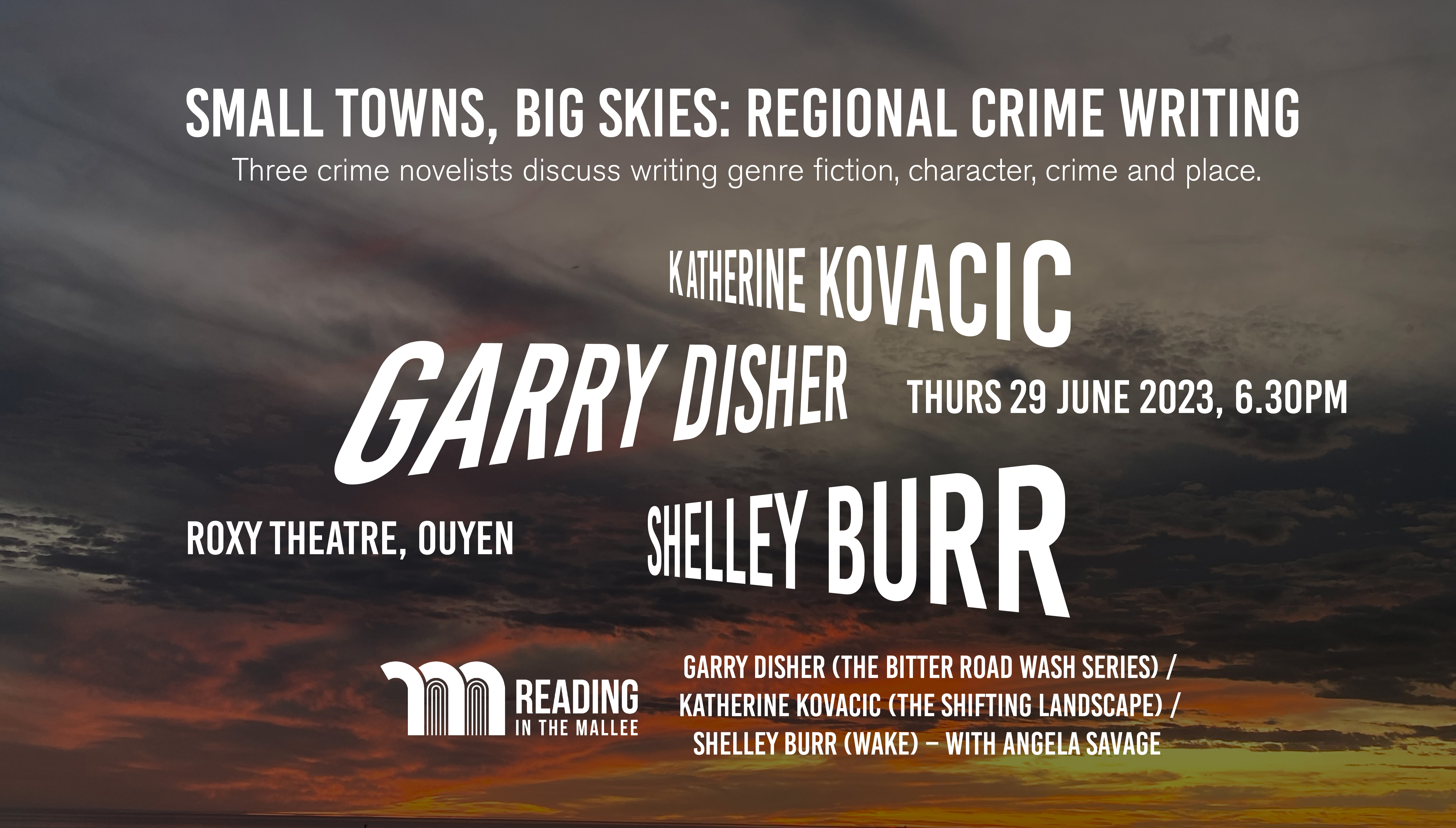
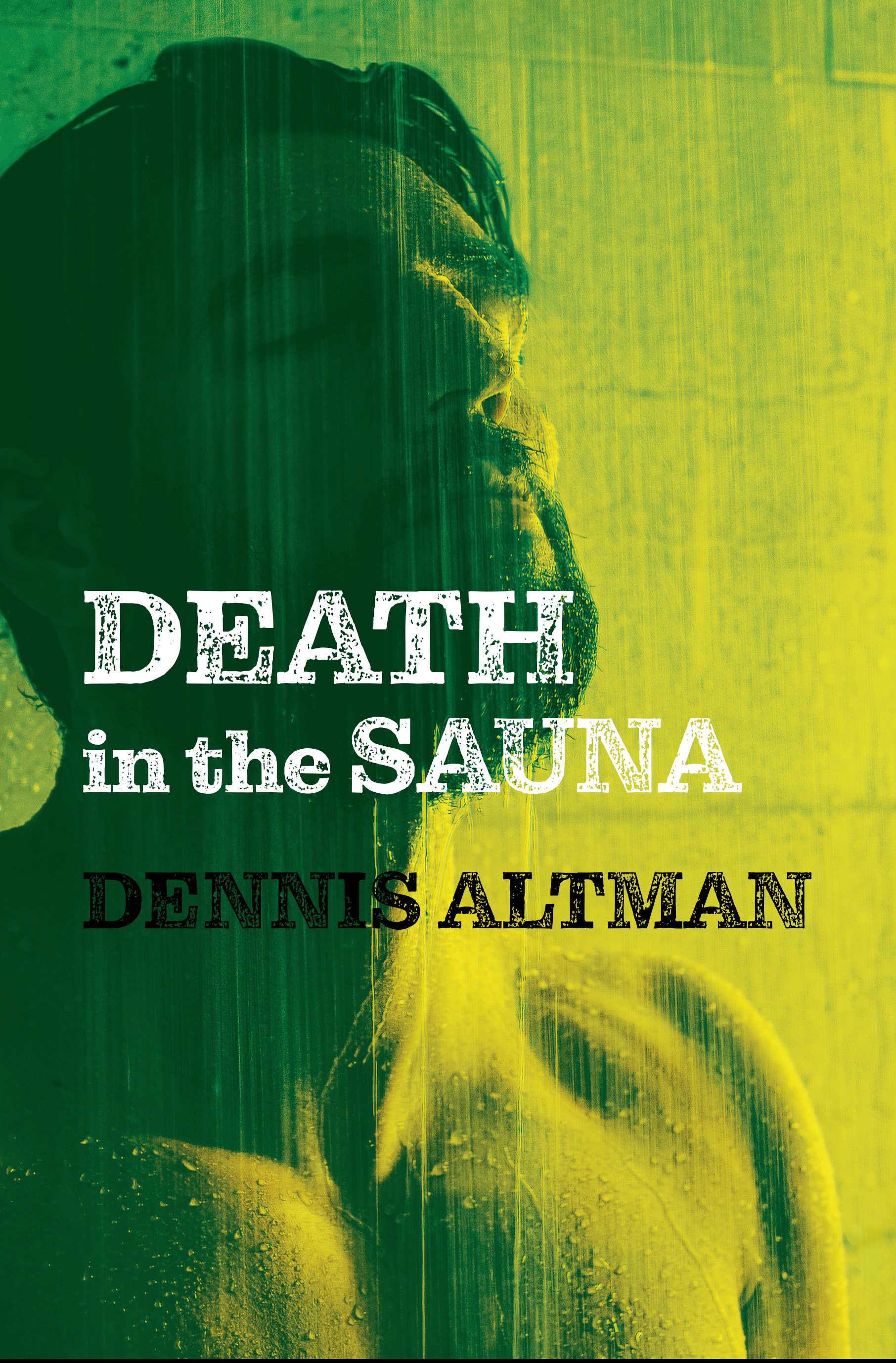 The following week I have the privilege and pleasure of launching Dennis Altman’s first crime novel, Death in the Sauna at Readings Carlton. Death in the Sauna is set during an international AIDS Conference in London, 2003, with the conference chair found dead in suspicious circumstances. In real life, Dennis and I often crossed paths at international AIDS conferences. I’d studied his groundbreaking book, AIDS and the New Puritanism, at university in the late-1980s, which was one of the things that influenced my decision to work on HIV/AIDS projects for more than ten years.





 Angela Savage